


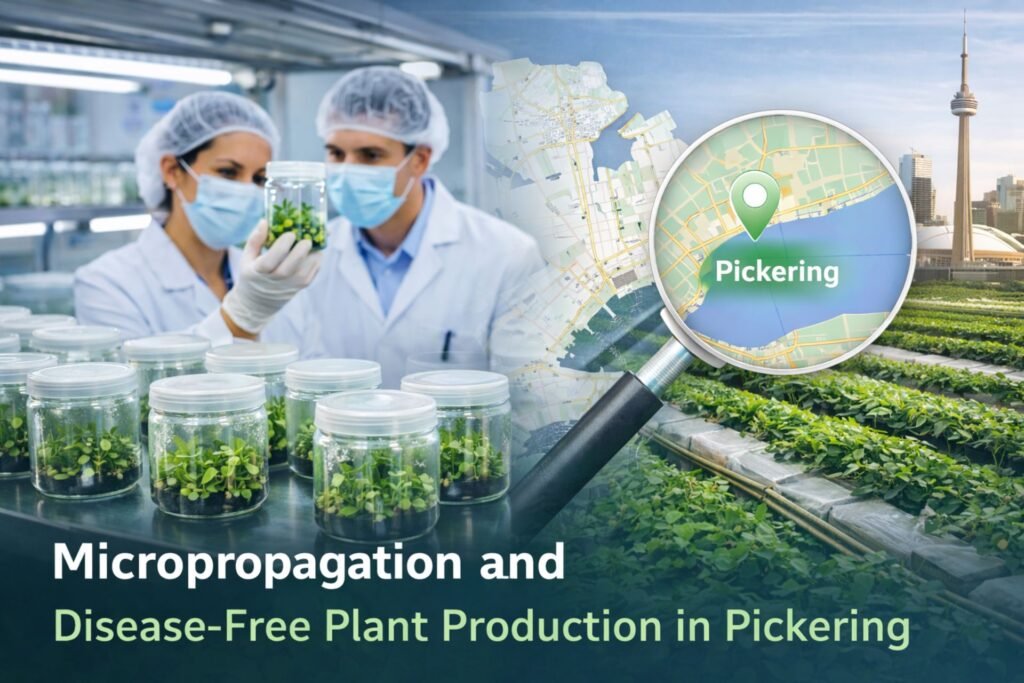
Micropropagation and Disease-Free Plant Production in Pickering Explained
The Science Behind Clean and Reliable Plant Propagation
Modern agriculture depends heavily on precision, quality, and consistency. As growers and commercial nurseries seek more reliable ways to produce healthy crops, advanced propagation technologies are becoming increasingly important. Among these technologies, micropropagation has emerged as one of the most effective methods for producing high-quality, disease-free plants on a large scale.
In regions like Pickering, Ontario, where commercial horticulture, greenhouse production, and modern farming systems continue to expand, growers are turning toward laboratory-based propagation solutions. By using sterile environments and scientifically controlled processes, micropropagation ensures that plants begin their growth cycle free from harmful pathogens and genetic inconsistencies.
For commercial growers, nurseries, and agricultural businesses, understanding micropropagation and disease-free plant production in Pickering can help unlock new levels of productivity and crop reliability.
Understanding Micropropagation
Micropropagation is a specialized plant propagation technique performed under controlled laboratory conditions. It involves growing small pieces of plant tissue in sterile containers with nutrient-rich media that encourage rapid growth and multiplication.
Unlike traditional propagation methods such as cuttings or seeds, micropropagation offers a highly controlled environment where every stage of development can be monitored and optimized.
This method provides several major advantages:
-
Rapid multiplication of selected plant varieties
-
Uniform growth characteristics
-
Production of disease-free plants
-
Year-round propagation independent of seasons
Because of these benefits, micropropagation and disease-free plant production in Pickering has become an essential part of modern horticulture and commercial agriculture.
Why Disease-Free Plants Are Crucial for Growers
Plant diseases can significantly impact crop performance, productivity, and profitability. Even a small amount of contamination can spread quickly across large growing operations, particularly in greenhouse and indoor farming environments.
Disease-free plants offer a strong foundation for successful cultivation. When propagation begins with clean plant material, growers can reduce the risk of infections, pests, and long-term crop damage.
Laboratory-based propagation ensures strict hygiene protocols. Equipment, growing media, and plant tissues are handled under sterile conditions to eliminate contamination risks. This process allows growers to establish crops with greater confidence and reliability.
According to the Food and Agriculture Organization, clean planting material is one of the most effective strategies for preventing plant disease outbreaks and improving agricultural productivity worldwide.
The Role of Micropropagation in Modern Agriculture
Micropropagation plays an important role in the supply chain of high-quality plants used in commercial agriculture. The technique allows growers to multiply superior plant varieties quickly while maintaining their original characteristics.
In regions like Pickering, where greenhouse operations and horticultural businesses are growing rapidly, reliable propagation systems are essential.
Consistent Crop Quality
One of the biggest advantages of micropropagation is uniformity. Plants produced through this method share identical genetic traits, ensuring predictable growth patterns and consistent crop results.
For commercial growers, this consistency simplifies crop management and improves overall yield stability.
Rapid Production at Scale
Traditional propagation techniques can take months to produce a large number of plants. Micropropagation accelerates this process by allowing multiple growth cycles within a controlled laboratory environment.
This rapid multiplication makes micropropagation and disease-free plant production in Pickering a valuable solution for growers who need large quantities of plants within shorter timeframes.
Supporting Greenhouse and Indoor Growing Systems
Modern agriculture is increasingly moving toward controlled environment farming, including greenhouses and indoor growing facilities. These systems require plants that are uniform, healthy, and capable of performing well under specific environmental conditions.
Micropropagation provides an ideal starting point for these operations because the plants are produced in sterile laboratory environments before being transferred to growing facilities.
Key advantages for greenhouse growers include:
-
Reduced disease risks
-
Predictable plant development
-
Improved crop management
-
Efficient use of growing space
With the support of micropropagation and disease-free plant production in Pickering, growers can maintain reliable crop cycles and meet market demand more effectively.
Environmental Benefits of Micropropagation
Sustainability has become a major priority for the agricultural industry. Micropropagation contributes to more environmentally responsible farming practices in several ways.
Reduced Chemical Dependence
Because plants are produced in sterile laboratory conditions, they begin their growth cycle free from many common pathogens. This reduces the need for chemical treatments during early stages of cultivation.
Conservation of Valuable Plant Varieties
Micropropagation allows rare, valuable, or high-performing plant varieties to be preserved and multiplied without damaging the original source material.
This capability is particularly important for maintaining genetic diversity and protecting important plant resources.
Efficient Resource Utilization
Uniform plants grow more predictably and efficiently. This can reduce the need for excess fertilizers, water, and other agricultural inputs, contributing to more sustainable farming practices.
These advantages demonstrate why micropropagation and disease-free plant production in Pickering is becoming increasingly important for the future of agriculture.
How Professional Tissue Culture Providers Support Growers
Behind successful micropropagation programs are specialized laboratories equipped with advanced technology and skilled professionals. These facilities operate under strict sterile conditions and follow carefully controlled protocols to ensure high-quality plant production.
Professional tissue culture providers typically offer services such as:
-
Micropropagation of selected plant varieties
-
Clean plant production programs
-
Large-scale propagation for commercial agriculture
-
Custom propagation solutions for growers and nurseries
Companies like Canadian Invitro Plants focus on delivering high-quality in vitro propagation solutions for commercial growers, nurseries, and agricultural businesses.
Through innovative laboratory techniques and strict quality control standards, these providers help ensure reliable plant supply chains for modern agriculture.
You can also explore more about advanced plant propagation services by visiting the official website of Canadian Invitro Plants:
https://canadianinvitroplants.com/
The Future of Micropropagation in Pickering
As agriculture continues to evolve, the demand for reliable propagation technologies will only increase. Innovations in plant science, biotechnology, and controlled-environment agriculture are driving rapid changes across the horticulture industry.
Micropropagation will remain a key part of this transformation. With its ability to produce clean, uniform plants at scale, the technique supports both commercial farming and sustainable agricultural development.
For growers in Ontario and across Canada, adopting micropropagation and disease-free plant production in Pickering can provide a strong competitive advantage. By starting with healthy plants and consistent genetics, growers can improve crop performance, reduce losses, and achieve more reliable production outcomes.
Conclusion
Micropropagation has revolutionized the way plants are propagated for modern agriculture. By combining scientific precision with sterile laboratory environments, this technology allows growers to produce high-quality, disease-free plants with remarkable efficiency.
For nurseries, greenhouse operators, and agricultural businesses, reliable propagation methods are essential for maintaining productivity and meeting market demand. Through advanced laboratory techniques, micropropagation and disease-free plant production in Pickering provides growers with the consistency, health, and scalability needed for successful cultivation.
As agriculture continues to advance, micropropagation will remain an essential tool in supporting sustainable, efficient, and high-quality plant production.
Thank you for reading! If you’re ready to grow with us, connect with Canadian Invitro Plants today 🌱✨
🔗 Website: https://canadianinvitroplants.com
📍 Abbotsford, British Columbia, Canada
📞 Contact: +1 604-621-0545