

How to Start a Berry Farm in Vancouver Using InVitro Raspberry Plants
Building a Profitable Berry Farm in Vancouver with InVitro Raspberry Plants
Starting a berry farm in Vancouver is a promising agricultural opportunity, especially when you begin with InVitro raspberry plants. These disease-free, uniform, and high-performing plants give growers a strong foundation for commercial success in British Columbia’s ideal berry-growing climate. With increasing demand for locally grown raspberries, choosing premium propagation methods ensures consistent yields and long-term profitability.
At Canadian InVitro Plants, we work closely with growers across Canada who want uniform, disease-free, and high-performing raspberry stock. If you are considering launching your own berry operation in the Lower Mainland, this comprehensive guide will walk you through everything you need to know—from site selection to long-term profitability.
Why Vancouver Is Ideal for Raspberry Farming
Vancouver and the surrounding Fraser Valley region offer an exceptional environment for berry production. The mild coastal climate, fertile soils, and consistent rainfall create optimal growing conditions for raspberries. In fact, British Columbia has long been recognized as one of Canada’s leading raspberry-producing regions.
Here’s why the region works so well:
-
Moderate winters reduce plant stress
-
Warm (but not extreme) summers encourage fruit development
-
Well-drained loamy soils support strong root systems
-
Established agricultural infrastructure and local markets
When paired with InVitro raspberry plants, growers can further enhance these natural advantages with uniform growth and consistent productivity.
What Are InVitro Raspberry Plants?
InVitro raspberry plants are produced using tissue culture technology in a controlled laboratory environment. This modern propagation method ensures:
-
Disease-free starting material
-
Genetic consistency
-
Strong root establishment
-
Faster field performance
-
Scalable production
Unlike traditional propagation methods, tissue culture eliminates hidden pathogens that can reduce yield and longevity. For commercial berry farming, starting with clean and uniform stock is critical to maintaining profitability year after year.
Step 1: Develop a Clear Business Plan
Before planting your first row, outline a detailed business strategy. Consider:
-
Farm size (1–5 acres for beginners is common)
-
Target markets (fresh market, frozen, wholesale, U-pick)
-
Labor requirements
-
Equipment investment
-
Irrigation systems
-
Packaging and distribution
A strong business plan ensures you understand startup costs and expected returns. Many Vancouver growers benefit from selling directly to local retailers, farmers’ markets, and community-supported agriculture programs.
For official agricultural guidelines and support programs in British Columbia, visit the Government of British Columbia website for updated resources and grants available to berry farmers.
For provincial agricultural support programs and berry production resources, visit the official website of the Government of British Columbia:
https://www2.gov.bc.ca/gov/content/industry/agriculture-seafood
Step 2: Select the Right Site
Location plays a decisive role in your farm’s success.
Soil Requirements
-
Well-drained sandy loam soil
-
pH between 5.5 and 6.5
-
Organic matter content above 3%
Conduct a professional soil test before planting. If necessary, amend soil with compost or organic material to improve drainage and nutrient availability.
Sunlight and Airflow
Raspberries require full sun exposure for at least 6–8 hours daily. Proper airflow reduces disease pressure and improves fruit quality.
Drainage
Avoid low-lying areas where water accumulates. Raised beds are often recommended for better drainage and root health.
Step 3: Why Choose InVitro Raspberry Plants
1. Disease-Free Foundation
Starting with clean stock reduces risks of root rot, viral infections, and fungal diseases. This dramatically improves long-term yield potential.
2. Uniform Growth
Consistency across rows allows easier harvesting, better crop management, and predictable production cycles.
3. Higher Yield Potential
Healthy root systems lead to vigorous canes and improved fruit set.
4. Scalability
Commercial growers can expand operations confidently when they know their starting material is reliable.
When establishing a berry farm in Vancouver, investing in premium-quality propagation material significantly impacts overall farm performance.
Step 4: Field Preparation and Planting
Once your site is selected and soil is prepared, it’s time for planting.
Spacing Guidelines
-
2–3 feet between plants
-
8–10 feet between rows
This spacing allows proper air circulation and simplifies harvesting.
Irrigation
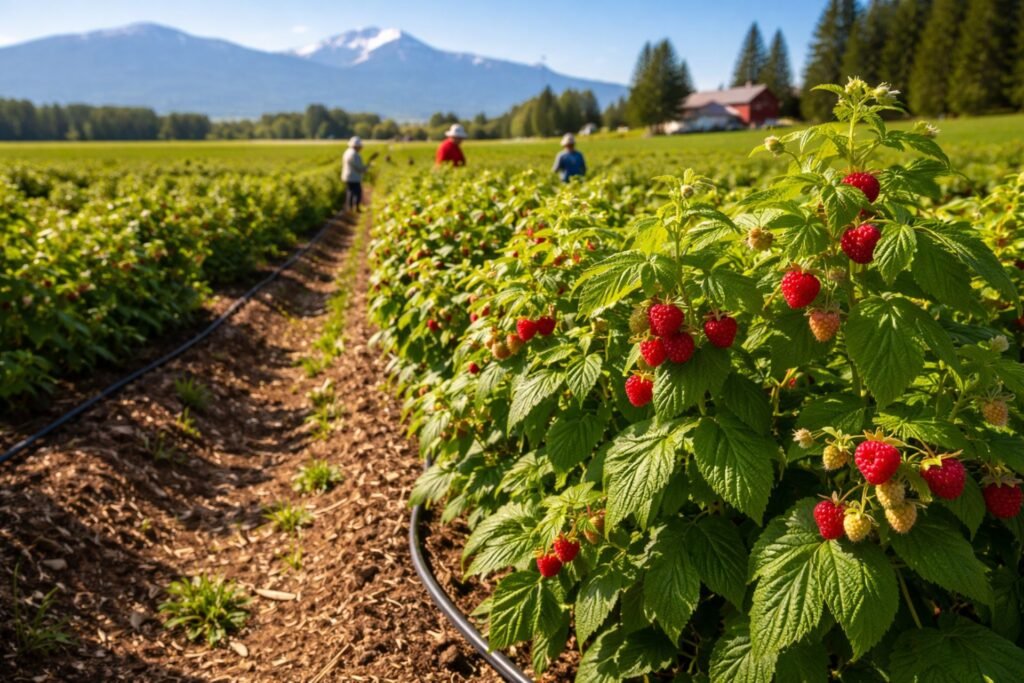
Drip irrigation systems are ideal. They provide consistent moisture without oversaturating the soil.
Mulching
Apply organic mulch to suppress weeds, retain moisture, and regulate soil temperature.
Planting is typically done in early spring once frost risk has passed.
Step 5: Ongoing Crop Management
Maintaining your berry farm requires continuous care.
Fertilization
Use balanced fertilizers tailored to raspberry nutrient needs. Avoid excessive nitrogen, as it may reduce fruit production.
Pruning
Annual pruning is essential to maintain productivity. Remove old fruiting canes after harvest to encourage healthy new growth.
Pest and Disease Monitoring
Even with disease-free starting stock, regular monitoring is crucial. Integrated Pest Management (IPM) practices reduce chemical dependency while protecting yields.
Marketing Your Raspberry Farm in Vancouver
Demand for fresh, local berries remains strong in British Columbia. Consider multiple revenue channels:
-
Farmers’ markets in Vancouver
-
Direct-to-retail grocery partnerships
-
Farm gate sales
-
Frozen berry processing
-
Online subscriptions
Consumers increasingly prefer locally grown produce with traceable origins. Highlighting sustainable growing methods and high-quality propagation practices adds value to your brand.
Financial Expectations
While startup costs vary depending on acreage and infrastructure, raspberry farms typically begin generating returns within the first or second full harvest year. With strong management and quality propagation stock, yields can remain productive for several years.
Key cost considerations include:
-
Land preparation
-
Irrigation systems
-
Labor
-
Fertilizers and soil amendments
-
Packaging and logistics
The use of InVitro raspberry plants may involve a higher initial investment, but it often leads to lower disease-related losses and improved long-term profitability.
Sustainability and Long-Term Success
Modern berry farming is increasingly focused on sustainability. Vancouver consumers value environmentally responsible agriculture.
Best practices include:
-
Efficient water management
-
Organic soil improvement
-
Reduced pesticide use
-
Crop rotation planning
By combining sustainable practices with premium propagation material, growers position themselves for long-term success in British Columbia’s competitive berry market.
Why Partner with Canadian InVitro Plants?
At Canadian InVitro Plants, we specialize in supplying high-quality InVitro raspberry plants for commercial growers across Canada. Our tissue culture process ensures uniform, disease-free stock ready for successful field establishment.
We understand the unique climate conditions of Vancouver and British Columbia, and we are committed to supporting growers with reliable, scalable solutions.
Whether you are launching your first berry farm or expanding an existing operation, starting with superior propagation material gives you a strong competitive edge.
Final Thoughts
Starting a berry farm in Vancouver is a promising opportunity when approached strategically. From selecting the right site to investing in premium propagation material, each step contributes to long-term profitability.
By choosing InVitro raspberry plants, growers reduce risk, enhance crop uniformity, and maximize yield potential in one of Canada’s most favorable berry-growing regions.
With careful planning, sustainable practices, and high-quality starting stock, your berry farm can thrive in Vancouver’s dynamic agricultural landscape.
Thank you for reading! If you’re ready to grow with us, connect with Canadian Invitro Plants today 🌱✨
🔗 Website: https://canadianinvitroplants.com
📍 Abbotsford, British Columbia, Canada
📞 Contact: +1 604-621-0545