


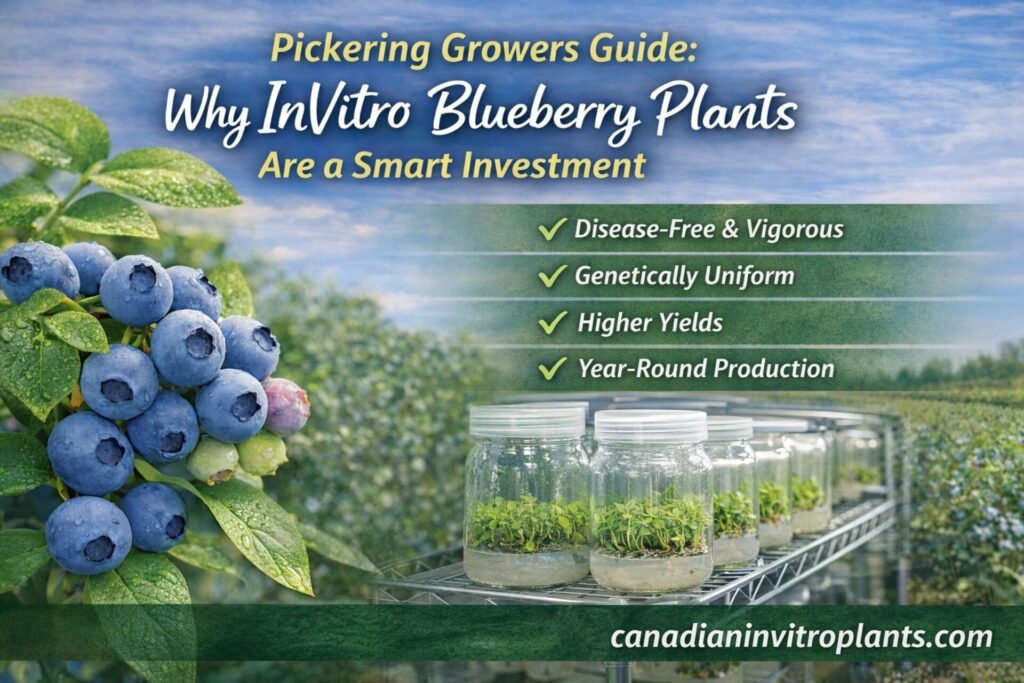
Pickering Growers Guide: Why InVitro Blueberry Plants Are a Smart Investment
Cultivating Success with Advanced Blueberry Propagation
Choosing the right Pickering InVitro blueberry plants supplier is one of the most important decisions for growers aiming to maximize yield, quality, and long-term profitability. In Pickering and across Ontario, commercial berry producers are increasingly turning to tissue culture propagation for uniform, disease-free blueberry stock that delivers consistent field performance and stronger returns.
In this guide, we’ll explore why choosing Pickering InVitro blueberry plants suppliers sources is a strategic decision for commercial growers, community farmers, and horticulture enthusiasts alike. From disease prevention to scalable production and improved yields, InVitro propagation helps growers unlock the full potential of their blueberry operations.
How Pickering Growers Benefit from InVitro Blueberry Propagation
InVitro propagation- also known as tissue culture, is a modern horticultural technique in which plant material is grown in sterile laboratory conditions. Using this method, nursery stock starts from carefully selected explants and is multiplied under controlled environments to produce healthy, genetically consistent plants. For blueberries, this approach offers several important advantages:
1. Disease-Free Stock
Blueberries are susceptible to a range of soil-borne pathogens and viruses that can compromise crop performance. InVitro propagation begins in a sterile environment, minimizing the presence of harmful organisms and reducing losses after field planting.
2. Genetic Consistency
Uniform growth habits and predictable yield characteristics are essential in commercial berry production. Tissue culture ensures that every blueberry plant you receive matches the cultivar’s desired traits, giving your fields a consistent performance standard.
3. Rapid Multiplication
Unlike traditional cuttings or grafts, tissue culture allows for the rapid increase of desirable cultivars. This means faster availability of high-quality material for larger planting projects, ideal for both seasonal expansion and long-term planning.
4. Year-Round Production
InVitro propagation isn’t constrained by seasonal limitations. Plants can be produced throughout the year, ensuring consistent supply when you need it most, another reason a Pickering InVitro blueberry plants supplier is an invaluable partner.
These benefits combine to make InVitro blueberry material a smart investment for growers pursuing high yields and commercial success.
Why Blueberries Are a High-Value Crop in Pickering
Blueberries have grown in popularity on both domestic and international markets. Consumer demand for fresh, flavorful, and health-focused fruits continues to rise, and Canadian growers are well positioned to meet that demand.
Several factors contribute to the crop’s appeal:
-
Nutritional value — Blueberries are rich in antioxidants and vitamins, making them a favorite among health-conscious buyers.
-
Market demand — Retail sales continue to grow year over year, with opportunities in fresh markets, processing, and value-added products like jams and juices.
-
Adaptability — Blueberry varieties suited to Canadian climates perform well with proper soil preparation and care.
-
Profit potential — High market prices and strong yields create attractive revenue streams for committed growers.
By starting with robust, tissue culture-propagated material, growers can optimize their chances of meeting these market opportunities successfully.
For comprehensive information on blueberry production best practices, the Government of Canada’s agricultural resources provide detailed guidance: check out the .
How InVitro Blueberry Plants Improve Field Performance
Starting your blueberry operation with superior material helps every stage of the production cycle — from establishment through fruiting.
Strong Establishment
Plants grown through tissue culture typically develop well-formed root systems and vigorous shoots. This translates to quicker establishment in the field and faster transition to the productive phase.
Uniform Field Growth
Whether you’re planting a few acres or expanding an existing orchard, consistency matters. Uniform growth makes it easier to manage irrigation, fertilization, pruning, and harvest operations — saving time and reducing variability.
Enhanced Resilience
Because InVitro propagation reduces early exposure to disease, plants are generally more resilient to stress and show better performance after transplanting. This translates to improved survival and stronger long-term yields.
Scalability
For growers with expansion plans, having a predictable supply of quality propagation material means you can scale up faster without compromising quality.
In essence, investing in high-quality tissue culture stock lays a strong foundation for successful blueberry production.
Choosing the Right Blueberry Varieties for Pickering
In picking cultivars, understanding your local climate, soil conditions, and market preferences is critical. Some varieties excel in cold tolerance, while others are prized for fruit size, flavor, or processing qualities.
A Pickering InVitro blueberry plants supplier can help guide you toward selections that match your goals — whether you’re targeting fresh markets or value-added products. Working with knowledgeable professionals gives you access to a range of cultivars that have been propagated to maintain their unique characteristics and performance potential.
Best Practices for Establishing Blueberry Fields with Tissue Culture Material
To make the most of your investment in InVitro blueberry material, follow these establishment best practices:
Soil Preparation
Blueberries thrive in well-drained, acidic soils rich in organic matter. Performing soil testing before planting helps tailor nutrient and pH management strategies to your site.
Site Selection
Full sun exposure and proper spacing improve air circulation and reduce disease pressures in the field. Avoid low-lying areas prone to waterlogging.
Transplanting Techniques
Handle tissue culture-propagated plants with care. Although vigorous, they benefit from gentle handling and appropriate hardening off before moving into the field.
Irrigation Management
Consistent moisture is key to successful establishment and fruit development. Implement irrigation systems that support gradual, even soil moisture without waterlogging.
Ongoing Monitoring
Regular scouting for pests, diseases, and nutrient deficiencies helps protect your investment and keeps your vineyard on track.
Adhering to these practices enhances the performance of your blueberry operation from day one.
Economic Advantages of InVitro Blueberry Production
Investing in quality propagation material may require a higher upfront cost than traditional methods, but the long-term economic benefits often outweigh the initial investment.
Here’s why:
-
Reduced losses — Disease-free material means fewer replanting costs and lower replacement rates.
-
Higher yield consistency — Uniform plants lead to predictable harvests, which improves planning and revenue forecasting.
-
Lower chemical dependency — Healthier stock reduces the need for extensive disease control inputs.
-
Market readiness — With consistent plant quality, you can build a reputation for reliable, high-quality fruit that appeals to buyers.
In the competitive blueberry market, strategic investments in propagation quality help you differentiate your product and maximize profitability.
Sustainability and Responsible Growing
Today’s consumers and buyers increasingly value sustainability. InVitro propagation aligns with responsible growing practices by reducing disease introduction and minimizing chemical use early in production. Cleaner stock supports healthier fields overall and promotes long-term viability.
Environmental stewardship is central to modern agriculture, and growers who prioritize quality and sustainability position themselves for success — both economically and ecologically.
Growers can also refer to national agricultural guidelines provided by Agriculture and Agri-Food Canada for best practices in berry production.
-
For blueberry production practices in Canada:
https://agriculture.canada.ca -
For Ontario horticulture standards and grower resources:
https://www.landscapeontario.com
Partnering with a Trusted Supplier
Selecting the right nursery partner is essential. A Pickering InVitro blueberry plants supplier should offer:
-
Proven expertise in tissue culture propagation
-
Consistent quality standards
-
Guidance on cultivar selection suited to your climate
-
Reliable supply and delivery schedules
-
Responsive customer support
Working with a reputable provider ensures that your investment is supported by scientific best practices and industry-leading production methods.
Planning for Long-Term Success
Blueberry production is a long-term commitment that rewards careful planning and sound horticultural practices. Establishing your fields with superior propagation material sets the stage for many seasons of productivity and growth.
By choosing InVitro-propagated blueberry stock, you’re investing in a future where your fields are healthier, more uniform, and better equipped to meet market demand.
Thank you for reading! If you’re ready to grow with us, connect with Canadian Invitro Plants today 🌱✨
🔗 Website: https://canadianinvitroplants.com
📍 Abbotsford, British Columbia, Canada
📞 Contact: +1 604-621-0545