

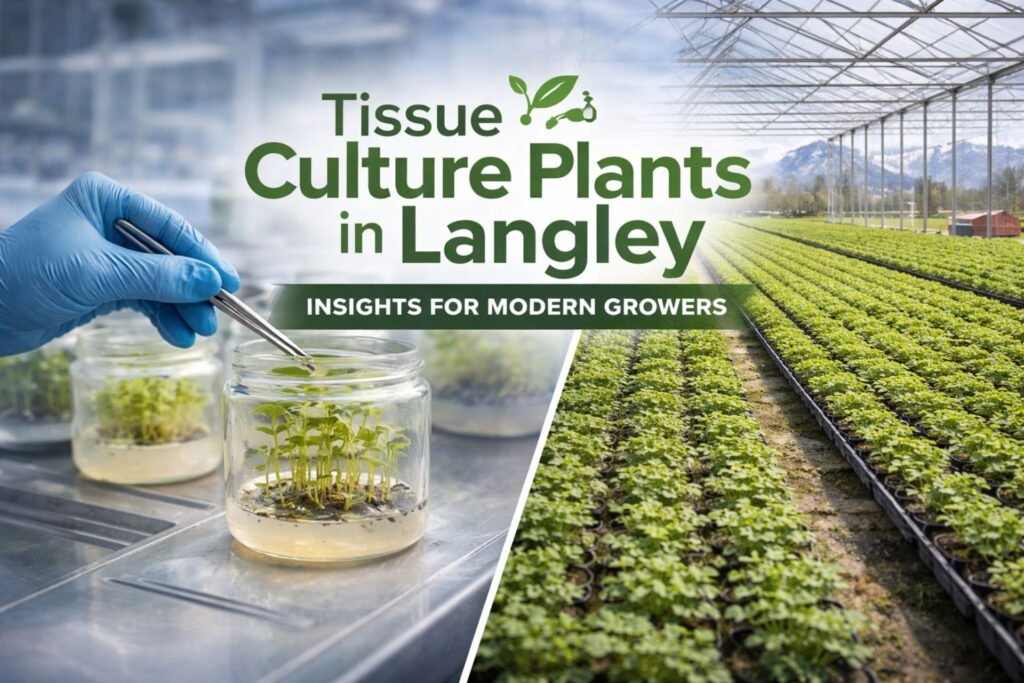
The Science Behind Tissue Culture Plants: Insights for Growers in Langley
Understanding the Science of Modern Plant Propagation
In today’s rapidly evolving agricultural landscape, growers in Langley and across British Columbia are increasingly turning to advanced propagation methods to meet rising demands for quality, consistency, and sustainability. Among these innovations, tissue culture stands out as a scientifically precise and highly efficient technique that is reshaping how plants are produced.
Tissue culture is more than just a modern farming method—it is a controlled, laboratory-based approach that allows growers to cultivate plants under optimal conditions. By eliminating environmental uncertainties and minimizing disease risks, this technique ensures superior plant quality right from the start. For growers in Langley, where agricultural excellence is key, understanding this science can unlock new levels of productivity and profitability.
What Is Tissue Culture and How Does It Work?
Tissue culture, also known as micropropagation, involves growing plants in a sterile environment using nutrient-rich media. The process begins with a small piece of plant tissue—carefully selected for its health and genetic quality—which is then placed in a controlled environment to grow and multiply.
The Key Stages of Tissue Culture:
1. Initiation Stage
A clean and healthy plant sample is introduced into a sterile culture medium. This step is critical, as contamination can affect the entire process.
2. Multiplication Stage
The plant material begins to grow and multiply rapidly. This stage allows growers to produce large quantities in a relatively short time.
3. Rooting Stage
Shoots develop roots, preparing them for transfer outside the lab environment.
4. Acclimatization Stage
Plants are gradually introduced to natural conditions, ensuring they can thrive in greenhouses or open fields.
Each stage is carefully monitored to ensure optimal growth conditions, resulting in uniform and high-quality plants.
Why Tissue Culture Is Ideal for Growers in Langley
Langley is known for its rich agricultural heritage and favorable growing conditions. However, modern challenges such as climate variability, pest pressures, and market competition require innovative solutions.
Tissue culture provides several advantages tailored to these needs:
1. Disease-Free Plant Production
Plants grown in sterile environments are free from pathogens, giving growers a strong and healthy start.
2. Consistent Quality
Uniform growth ensures predictable yields, which is essential for commercial operations.
3. Faster Production Cycles
Growers can scale production quickly, meeting market demand without delays.
4. Space Efficiency
Large quantities of plants can be produced in compact lab environments before being transferred to greenhouses.
The Scientific Benefits Behind Tissue Culture
The success of tissue culture lies in its scientific precision. By controlling every aspect of the growth environment—light, temperature, nutrients, and humidity—labs can create ideal conditions for plant development.
Controlled Nutrition
Plants receive a perfectly balanced mix of nutrients, promoting faster and healthier growth.
Genetic Stability
Careful selection ensures that each plant maintains desired characteristics, which is especially important for commercial crops.
Reduced Chemical Usage
Since plants are grown in sterile conditions, the need for pesticides and chemical treatments is significantly reduced.
For additional information on plant biotechnology and its applications, you can explore resources from:
🔗 https://www.nrcan.gc.ca (Natural Resources Canada)
Applications Across Modern Agriculture
Tissue culture is widely used across multiple agricultural sectors in Langley and beyond. Its versatility makes it suitable for a variety of crops and applications.
Common Uses Include:
- Berry Crop Production: Ensuring uniform and high-yield harvests
- Ornamental Plants: Producing visually consistent and market-ready plants
- Commercial Farming: Supporting large-scale agricultural operations
- Research and Development: Enhancing crop traits and resilience
This adaptability makes tissue culture an essential tool for modern growers looking to stay competitive.
Sustainability and Environmental Impact
Sustainability is a growing priority in Canadian agriculture, and tissue culture aligns perfectly with eco-friendly practices.
By starting with clean and healthy plants, growers can significantly reduce crop losses and minimize the use of harmful chemicals. This not only benefits the environment but also improves the overall quality of produce.
Additionally, the efficiency of tissue culture reduces waste and optimizes resource use, making it a sustainable choice for long-term agricultural success.
The Future of Tissue Culture in Langley
As technology continues to evolve, the role of tissue culture in agriculture is expected to expand even further. Innovations such as automation, artificial intelligence, and advanced monitoring systems are set to enhance precision and efficiency.
For growers in Langley, this means:
- Greater control over production
- Improved crop resilience
- Increased profitability
The integration of science and agriculture is paving the way for a smarter, more sustainable future.
Partnering with Experts for Better Results
Success in tissue culture depends on expertise, precision, and quality control. Working with a trusted provider ensures that growers receive plants that meet the highest standards.
At Canadian InVitro Plants, we specialize in delivering premium-quality tissue culture plants tailored to the needs of modern growers. Our advanced lab techniques and commitment to excellence help growers achieve consistent and reliable results.
Explore our solutions here:
🔗 https://canadianinvitroplants.com/
Conclusion
Tissue culture is revolutionizing agriculture in Langley by combining science, efficiency, and sustainability. For growers aiming to improve crop quality, reduce risks, and scale production, this innovative approach offers unmatched advantages.
By understanding the science behind tissue culture, growers can make informed decisions that lead to long-term success in an increasingly competitive market.
Thank you for reading! If you’re ready to grow with us, connect with Canadian Invitro Plants today 🌱✨
🔗 Website: https://canadianinvitroplants.com
📍 Abbotsford, British Columbia, Canada
📞 Contact: +1 604-621-0545